
Body dysmorphia is not poor body image, it is a treatable mental health condition that affects men and women. Dr Rick Smith, Hong Kong clinical psychologist.
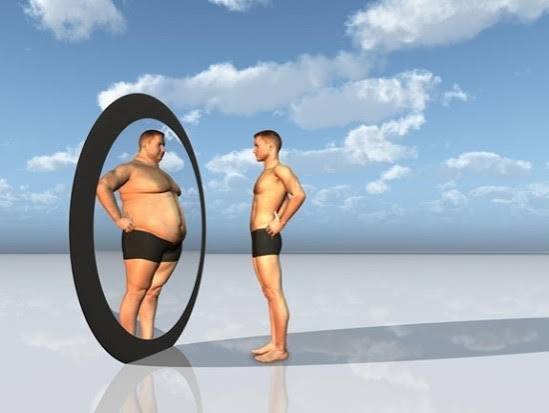


Body dysmorphia is not a problem with how you look, and it is not the same thing as body image. It is a mental health condition. In BDD, the brain processes appearance differently, so the person genuinely cannot see what everyone around them sees. The most useful question is therefore never whether a perceived flaw is real. It is what the condition has already taken from the person living with it, and how to get that life back.
I am Dr Rick Smith, PsyD | EdD, a clinical psychologist in Hong Kong working with high-performing teenagers and adults, including international school families and expatriate professionals. A steady part of my caseload is body dysmorphia, often in people who have spent years certain that the problem is their face or their body, rather than the way their attention and interpretation have been quietly hijacked.
In August 2026 I spoke to the South China Morning Post about the rise in appearance anxiety among Hong Kong teenagers and what parents can do about it. Newspaper space is short, so this piece is the fuller answer, including a section further down on what parents can actually do.
Key Takeaways
Body dysmorphia, properly called BDD for body dysmorphic disorder, is a mental health condition, not a comment on how someone looks. In the diagnostic system it sits alongside obsessive-compulsive and related disorders, and it responds to psychological treatment rather than to cosmetic change.
Body image is something everyone has, a running sense of how you feel about your appearance that rises and falls with mood and circumstance. Body dysmorphia is different in kind, not degree. Brain imaging research suggests people with the condition process visual detail differently, which helps explain why they cannot simply be reassured out of it.
Body dysmorphia affects men as well as women, in far greater numbers than the stereotype suggests. In men it is routinely missed, partly because it often centres on muscularity, size, hair, or a single feature, and partly because the rituals can look like discipline.
People with body dysmorphia organise the day around safety behaviours: checking or avoiding mirrors, camouflaging, comparing themselves to others in person and online, and seeking reassurance. Each ritual lowers the fear for a moment and feeds it over time.
The decisive question in treatment is not whether the flaw is real but what has been lost to the belief. The work aims to return the person to a life shaped by what they value, whether or not the way they see themselves changes first.
What is the difference between body image and body dysmorphia?
Body image is the ordinary, shifting sense of how you feel about your appearance. Most people dislike something about how they look, compare themselves to others on a bad day, and move on. Body dysmorphia is not the strong end of that spectrum. It is a different process. The thought is not I do not like this. It is closer to this is unbearable, everyone can see it, and I cannot be in the world until it is fixed. Brain imaging research points to genuine differences in how visual information is processed in body dysmorphia, with attention pulled toward tiny details and away from the whole face or body. In practice this means the person is not exaggerating a true flaw. They are, in a real sense, not seeing the same image that the people around them see. This is why reassurance fails, and why a sentence like you look completely fine lands as either a lie or a kindness rather than as information. It is also why I treat body dysmorphia as a condition related to obsessive thinking and compulsive behaviour, the same family that includes OCD, rather than as a confidence problem to be talked up.
Why is body dysmorphia so often missed in men?
Men struggle with body dysmorphia at rates much closer to women than most people assume, yet they are far less likely to be recognised or to seek help. Part of the reason is how it presents. In men the preoccupation frequently lands on muscularity and size, the sense of being too small or not lean enough however much is actually in the mirror, a pattern clinicians call muscle dysmorphia. It can also fix on hair, skin, the nose, the jaw, or height. Because the resulting behaviour often looks like dedication, hours in the gym, rigid eating, relentless training, it gets praised rather than questioned. A teenage boy or a high-achieving professional can carry this for years while everyone around him reads it as drive. In Hong Kong, where gym culture, examination pressure, and a competitive international school environment all reward visible self-control, the disguise is especially good. The cost shows up quietly: social withdrawal, avoidance of beaches and changing rooms, low mood, and a relationship with anxiety that never quite lifts. When a man finally describes the thoughts out loud, the relief is often simply that there is a name for it and that it is treatable, not a character flaw.
How do you know if it is body dysmorphia and not ordinary insecurity?
The clearest marker is not the content of the worry but how much of life it consumes. Ordinary insecurity is occasional and survivable. Body dysmorphia is time-consuming and disabling, and it runs on rituals. The thought might be they are looking at me and judging me, and the action is to leave the room, find a bathroom, fix the hair, reapply the camouflage, then check again. People compare themselves constantly, in person and through a phone, which is why I often discuss screentime as part of the picture. Underneath sits a particular error. The harsh judgment a person holds about themselves gets projected outward, so they assume everyone else is being just as critical and reacting to their appearance. When I ask how they reached that conclusion, the honest answer is usually that no one actually said anything; they simply felt it. They will tell me people do not comment because they are being polite. My reply is that people are not that kind, and that there is no coordinated effort to protect their feelings. The question to sit with is a simple one. Even if what you see were completely true, would that be a reason to stop living your life?
What does treatment for body dysmorphia actually involve?
Treatment for body dysmorphia is not surgery, and it is not endless reassurance, which only deepens the loop. The work is closer to what helps obsessive-compulsive difficulties: identifying the behaviours that keep the fear alive and gradually dropping them. I map with the person what maintains it, the mirror checks, the reassurance seeking, the avoidance of bright light, the comparing, and then I help them test what happens when those supports come down. Early on this feels worse, not better, because the person has just removed the safety barrier they have leaned on for years; that dip is expected and it passes. Alongside the behavioural work, I lay out two possibilities side by side. One is that the flaw is real and somehow no one else can see it. The other is that this is a mental health condition affecting how appearance is perceived. Then I build evidence with the person, walking back through their own history for the moments that supposedly confirmed the flaw, and finding, almost always, that the evidence is a feeling rather than a fact. I will often point out that this is not a new skill. You already weigh evidence carefully everywhere else in your life; you would not buy a flat because it felt right in the first ten seconds. The work simply applies the judgment you already trust to the one area where you have stopped using it. Where insight is lower and the person is convinced surgery is the answer, the early sessions lean more on patient education than on exposure, because change has to make sense before it can take hold.
Is it body image or something more, and when should you get help?
The line is not drawn by how unusual someone looks but by how much the concern is costing them. If appearance worries are occasional, do not dominate the day, and do not stop you doing the things you care about, that is body image, and it rarely needs clinical help. If, on the other hand, you or your teenager are losing hours to checking and comparing, avoiding school, work, social events, photographs, dating, or the beach, and feeling convinced that other people are reacting to a flaw they have never once mentioned, that is the territory of body dysmorphia, and it deserves proper assessment. The conviction that the answer is a cosmetic procedure, rather than psychological help, is itself one of the more telling signs, and one of the reasons the condition goes untreated for so long. For parents the signal is often behavioural before it is verbal: a child who used to be easy about appearance suddenly refusing to be photographed, changing clothes over and over, or pulling out of situations where the body is on show. None of this means the worst. Body dysmorphia is common, frequently missed, and genuinely treatable, and it tends to respond faster the earlier it is named.
What parents can actually do about appearance anxiety
The first instinct is almost always to reassure, and reassurance is the one response that reliably fails. Telling a thirteen year old that she looks lovely does not register as information, because she is not asking a question she believes you can answer. Worse, if it works for a moment, she will come back for it, and what began as comfort becomes a ritual she needs several times a day. The useful move is to stop arguing about whether the flaw is real and start asking what it is costing. A parent can say, honestly, that they see it differently, say it once, and then ask what she has stopped doing lately because of how she feels about her face.
Skincare and make-up are not the enemy, and treating them as one usually backfires. Most of this is ordinary experimentation, and a ban makes the thing more valuable and pushes it out of sight. What matters is function. If a child enjoys it, shows you what she bought, and can leave the house without it, that is play. If she cannot be seen without it, if the routine has to be completed in a fixed order, if being interrupted causes real distress, that is no longer cosmetic. On the products themselves, active ingredients such as acids and retinoids are not designed for young skin and often make it worse, which gives a parent a reason to set limits that has nothing to do with vanity and is much easier for a child to accept.
Watch what the household says about appearance, including about adults. Children calibrate to the commentary around them far more than to anything said directly to them. A parent who describes their own body with contempt at breakfast has taught a lesson that no encouraging speech will undo. The same applies to remarks about other people's weight, ageing, or surgery.
Then look at what the family has quietly rearranged. Parents of an anxious child almost always end up accommodating: retaking photographs until she approves one, buying the product to keep the peace, allowing her to skip the pool, answering the same question about her skin every evening. Each of these lowers the distress in the moment and teaches that the fear was worth taking seriously. Accommodations are best reduced deliberately and slowly, one at a time, and announced in advance rather than withdrawn in the middle of an argument. Telling a child that from Monday you will answer the question once and then stop is fair. Refusing to answer without warning is not.
The threshold for getting help is not how much a child dislikes her appearance. It is time and avoidance. If an hour is going into checking and comparing, if she is turning down invitations, avoiding photographs, changing repeatedly before leaving, or missing school, that is worth a proper assessment. Acting early makes the work shorter, and no parent needs to be certain of anything before asking.
If you recognise yourself or your child in this, the point of a first conversation is not to argue you out of what you see. It is to work out honestly what the belief has cost, and whether that cost is one worth carrying when it does not have to be. A clinical consultation can clarify whether what you are dealing with is ordinary body image or something closer to body dysmorphia, and what the most useful work would be from here.
Frequently Asked Questions
Is body dysmorphia the same as having a poor body image?
No. Body image is the ordinary, fluctuating sense of how you feel about your appearance, and almost everyone has parts of it they dislike. Body dysmorphia, properly called body dysmorphic disorder, is a recognised mental health condition in which appearance is processed differently and the preoccupation becomes time-consuming and disabling. The difference is one of kind, not degree, which is why reassurance and positive thinking rarely touch it. It sits in the diagnostic system alongside obsessive-compulsive and related disorders and responds to psychological treatment.
Does body dysmorphia affect men?
Yes, and far more than the stereotype suggests. Body dysmorphia affects men at rates much closer to women than most people realise, but it is routinely missed because it often centres on muscularity, size, hair, or a single feature, and because the behaviour can look like healthy discipline. The muscle-focused form, sometimes called muscle dysmorphia, predominantly affects men and involves feeling too small or insufficiently lean however much muscle is actually there. Many men carry it for years before they realise it has a name and is treatable.
Can people with body dysmorphia see themselves accurately?
Often not, and this is central to the condition. Brain imaging research suggests that people with body dysmorphia process visual information differently, with attention pulled toward small details rather than the whole face or body. In a real sense they are not seeing the same image other people see, which is why being told they look fine does not register as reassuring or even believable. This is also why the disorder is treated as a perceptual and psychological problem rather than a confidence issue.
Why does cosmetic surgery not fix body dysmorphia?
Because the problem is not in the feature, it is in how appearance is perceived and interpreted. People with body dysmorphia frequently pursue cosmetic procedures and are typically dissatisfied afterwards, with the preoccupation either returning to the same area or shifting to a new one. Believing that surgery is the answer is itself one of the recognised features of the condition, and one reason it so often goes untreated. Psychological treatment addresses the process that drives the distress, which is what actually changes the outcome.
What treatment works for body dysmorphia?
The most effective approach is psychological and resembles the treatment used for obsessive-compulsive difficulties. It involves identifying the rituals that keep the fear alive, such as mirror checking, camouflaging, comparing, and reassurance seeking, and gradually reducing them while building evidence against the feared belief. Treatment also works to return the person to a life guided by their values rather than by appearance fears. Progress can feel harder before it feels easier, because dropping long-held safety behaviours is uncomfortable, but that discomfort is part of recovery rather than a sign it is failing.
When should I seek help for myself or my child?
Seek help when appearance concerns are consuming significant time, driving avoidance of school, work, social situations, or photographs, and persisting despite reassurance. For a child or teenager, the early signs are often behavioural, such as refusing to be photographed, changing clothes repeatedly, or withdrawing from situations where the body is visible. You do not need to be certain it is body dysmorphia before getting an assessment, and acting early tends to make the work shorter. The condition is common, frequently missed, and treatable, particularly when it is named before it becomes entrenched.