
Social media body image distress looks different in males and females, but the underlying mechanism is the same. Dr Rick Smith, clinical psychologist, Hong Kong.
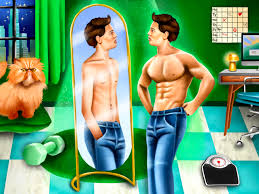


The evidence on social media and body image points consistently in one direction: what matters is not how many hours someone spends online but what they are looking at and who they are comparing themselves with. When the content is appearance-focused, the comparisons are upward, and the standard being held up is edited, filtered, and commercially driven, the downstream effects on self-perception are real and can be serious. The most useful starting point is not the screen but the standard itself.
I'm Dr Rick Smith, PsyD | EdD, a clinical psychologist in Hong Kong working primarily with high-performing teens and their families in international school communities. Body image concerns appear in my caseload more often than parents expect, and they look quite different across genders, with significant consequences for which version gets recognised early.
Key Takeaways
What matters for body image is not how long someone spends online but what they are looking at and how they are comparing themselves. Appearance-focused content featuring edited, filtered, and commercially driven bodies produces harm through comparison, not through duration.
The distress created by unrealistic body standards shows up differently in boys and girls and is recognised at very different rates. In girls, food and appearance concerns are now familiar to most adults. In boys, the same distress more often looks like discipline, health-focused eating, and training commitment, and tends to be praised rather than questioned.
The standard itself is the starting point. When parents name what has been edited, filtered, or chemically enhanced in the images their children encounter, they provide a corrective reference point that comparison-focused content does not supply.
What does social media actually do to a teenager's body image?
The research here is more precise than the general conversation about screen time suggests. The relevant factor is not duration but content. People who spend significant time on appearance-focused accounts and platforms, where images present an upward comparison with heavily edited bodies, show stronger links to body dissatisfaction than those who use screens for communication, or content unrelated to appearance. The mechanism appears to be repeated exposure to a standard presented as normal, achievable, and desirable when it is in practice constructed, digitally enhanced, or chemically altered.
In Hong Kong this process carries particular weight. Western body ideals arrive instantly and without friction in a city that already shows high rates of body dissatisfaction among young people, and the achievement and examination culture here sharpens the underlying perfectionism. A person already primed to measure themselves against standards in ther daily life can transfer that orientation to the body with very little distance.
The critical insight is that the standard itself is rarely questioned. When we see the same face or physique thousands of times, it stops registering as unusual and begins to register as baseline. Naming that process, out loud, before asking for any behaviour change, is the most upstream correction available.
How does this show up in girls?
The appearance ideal most prevalent in social media content aimed at females centres on flawless skin, facial symmetry, and a body that is simultaneously slim and toned. The products, routines, and procedures presented alongside these images form a commercial layer that frames the standard as attainable through purchase and effort. Females who engage heavily with this kind of content and compare themselves upward are at elevated risk of dissatisfaction with their skin, weight, and appearance generally. The effect is not universal: individual differences in pre-existing perfectionism and social comparison tendencies shape how much any particular teenager is affected.
The clinical presentations I see in this group vary: anxiety about appearance before social events, elaborate skincare regimens driven more by distress than enjoyment, changes in eating linked to body shape concerns, and a persistent sense that visible flaws require correction. These behaviours have become familiar enough to parents, teachers, and clinicians that they are now recognised relatively quickly, which is not nothing, but which creates a sharp contrast with what happens for boys.
Why is the same distress harder to spot in boys?
The parallel in males is less studied and far less recognised, and that gap is itself part of the problem. The male appearance ideal in current social media tends toward muscularity, leanness, and a sharp-jawed, angular face. Males responding to this standard do not typically present in the ways adults associate with body image difficulty. They train. They optimise. They follow nutrition protocols that are framed, by themselves and by the people around them, as discipline, commitment, and health rather than distress.
A male who never misses a gym session (i.e never skips leg day!), who eats with rigid precision, who researches supplements as carefully as others track their food, is frequently praised rather than questioned. The framing, "I'm just being healthy", or "I'm just working hard", is accepted because it fits a script that others are comfortable approving. Interest in extreme appearance modification, sometimes described as looksmaxxing, can begin with habits that look entirely ordinary and move gradually into territory that warrants much closer attention.
In clinical practice, the presentations I see in males often begin with social media accounts focused on transformation, then move toward precise tracking of food intake and training metrics, and sometimes toward increasing interest in substances or procedures intended to alter appearance. Each stage can look like the natural extension of the previous one. The concerning element is not any specific behaviour but the rigidity, the distress when the routine is interrupted, and the degree to which self-worth has become tied to achieving a visual outcome.
The recognition problem is structural. The template most people carry for body image difficulty is female and thin. Men who are in distress about their bodies tend to pursue largeness, leanness, and physical hardness, and the pursuit looks like admirable commitment. The evidence base for male body image is genuinely newer and less developed than for female body image, which means clinicians have fewer validated frameworks and less institutional attention to draw on. Awareness is currently the most available first line.
What connects the two?
What connects the female anxious about her skin and the boy who cannot skip a session is not a content category or a time-on-screen figure. It is the comparison being made against a standard that has not been named as constructed. Both are measuring themselves against an edited image presented as normal, repeated often enough to feel like a baseline, and both are finding themselves short. The distress is the same. The direction is different. The recognition is not equal.
This asymmetry has clinical costs. Boys are less likely to be referred for body image concerns, less likely to seek input themselves, and less likely to be asked about food, training, or appearance in a routine clinical encounter. The evidence base for what works in male body image is developing, not established, which means early identification by parents and teachers is doing more of the work than specialist systems are yet equipped to do.
What can parents do?
The most useful starting point is not a conversation about the person's behaviour but a specific observation about the content. Naming what has been edited, filtered, or chemically enhanced in a particular image, when you are watching it together, is more effective than a general warning that social media is unrealistic. The observation is specific, it is provable in the moment, and it gives a teenager something to hold onto the next time a similar image appears.
The second shift is in how certain behaviours are interpreted. I'm just being healthy and I'm just being disciplined are not statements to accept at face value but statements to slow down and look at more carefully. Not with alarm, but with curiosity. What does a typical day look like? How do you feel when you have to skip? Those questions open a conversation that blanket praise keeps closed.
The third is anchoring a teen's worth in effort, character, and what they have built, rather than in appearance. In Hong Kong's high-achievement environment this is harder than it sounds, because performance metrics already fill that space. A teenager who knows they are valued for who they are, rather than what they produce or display, has a layer of protection that appearance-focused comparison cannot easily reach.
When a teenager's relationship with food, training, or appearance has become rigid, joyless, or distressing, that is the point to seek clinical input rather than to wait. Early assessment can clarify whether what looks like discipline is functioning as distress, and if it is, what the most effective first steps look like.
If you are not sure whether what you are seeing is ordinary self-consciousness or something that warrants closer attention, that uncertainty is worth respecting. Teenagers rarely announce that something is wrong with their relationship to their body, particularly boys, and the behaviours that deserve attention are often the ones being quietly rewarded. Tonight, one thing: watch something together, notice what is being held up as normal, and say what you see. That question, asked more than once, does more work than most parents expect.
Frequently Asked Questions
Does social media cause body image problems in teenagers?
Social media does not cause body dissatisfaction uniformly, but it is consistently associated with it under specific conditions. The harm appears to track not the hours spent online but the content consumed and the comparisons made. When teenagers engage repeatedly with appearance-focused content featuring edited and unrealistic bodies and compare themselves upward to those images, dissatisfaction tends to follow. The effect is not universal: individual differences in pre-existing perfectionism and social comparison tendencies shape how much any teenager is affected.
Are boys affected by social media and body image in the same way as girls?
Boys are affected, and the effects are serious, but they tend to present differently and be recognised far less often. Girls respond to social media body ideals more often with concerns about thinness, skin, and appearance, and these responses are now relatively well recognised by adults. Boys more often pursue muscularity, leanness, and facial definition, and the behaviours associated with that pursuit, rigid training, controlled eating, and supplement research, are typically read as discipline or health rather than distress. The evidence for male body image difficulties is newer and less studied than for female body image, which is part of why the boys' version is routinely missed.
What is looksmaxxing, and should parents be concerned?
Looksmaxxing is an informal term for a range of practices aimed at improving physical appearance, particularly among teenage boys. It spans from relatively ordinary habits like improved sleep, posture work, and skin care through to more extreme interests in surgical procedures or other significant interventions. The concern is not the term itself but the underlying driver: a teenager measuring himself against an edited, algorithm-reinforced standard and concluding he falls short. When interest in appearance modification becomes rigid, preoccupying, or begins to crowd out other parts of life, that is the signal to look more closely rather than to continue approving the effort.
How do I know if my son's training and eating habits are a sign of distress?
The most useful question is not what the behaviour is but what drives it and what happens when it is interrupted. A teenager who trains and eats carefully but can adapt when circumstances require, enjoys the process, and does not become significantly distressed when routines are disrupted is in a different position from one for whom missing a session or eating off-plan produces marked anxiety or shame. When exercise and food control function as the primary way a teenager manages self-worth or distress, the pattern deserves attention regardless of how healthy it appears from the outside. Seeking clinical input early is better than waiting for the concern to entrench.
What should I say to my teenager about the bodies they see on social media?
The most effective starting point is not a general warning about social media but a specific observation about what a particular piece of content actually contains. Naming what has been edited, filtered, or chemically enhanced in a specific image is more useful than saying social media is unrealistic, because it is specific and provable rather than dismissible. Watching content together occasionally and commenting naturally, rather than supervising, gives teenagers a reference point for evaluating what they see. The goal is not to prevent comparison but to supply the corrective context that the content itself does not.
When should I seek professional help for a teenager with body image concerns?
The clearest signals are when concerns have become rigid or persistent, or are beginning to shape daily functioning. This includes significant changes in eating patterns, exercise that cannot be skipped without marked distress, a preoccupation with appearance that takes up increasing mental space, or withdrawal from activities where the body might be seen. Seeking input early, before patterns entrench, typically produces better outcomes and a shorter period of work. A clinical consultation can help distinguish ordinary adolescent self-consciousness from something that warrants direct attention, and can clarify the most efficient first steps for the specific teenager involved.
If you are a parent reading this rather than recognising yourself, I have written separately on what parents can do about appearance anxiety in teenagers.