
Perfectionism, ADHD, and OCD are not superpowers. Each looks productive but is driven by avoidance of internal experience, and the rebrand hides the cost.


Key Takeaways
Perfectionism, ADHD hyperfocus, and OCD compulsions are often rebranded as superpowers; the rebrand feels validating but hides the cost of behaviour that is actually maintaining a problem rather than expressing a strength.
All three patterns share the same underlying mechanism: behaviour organised around avoiding internal experience rather than moving toward what the person actually wants.
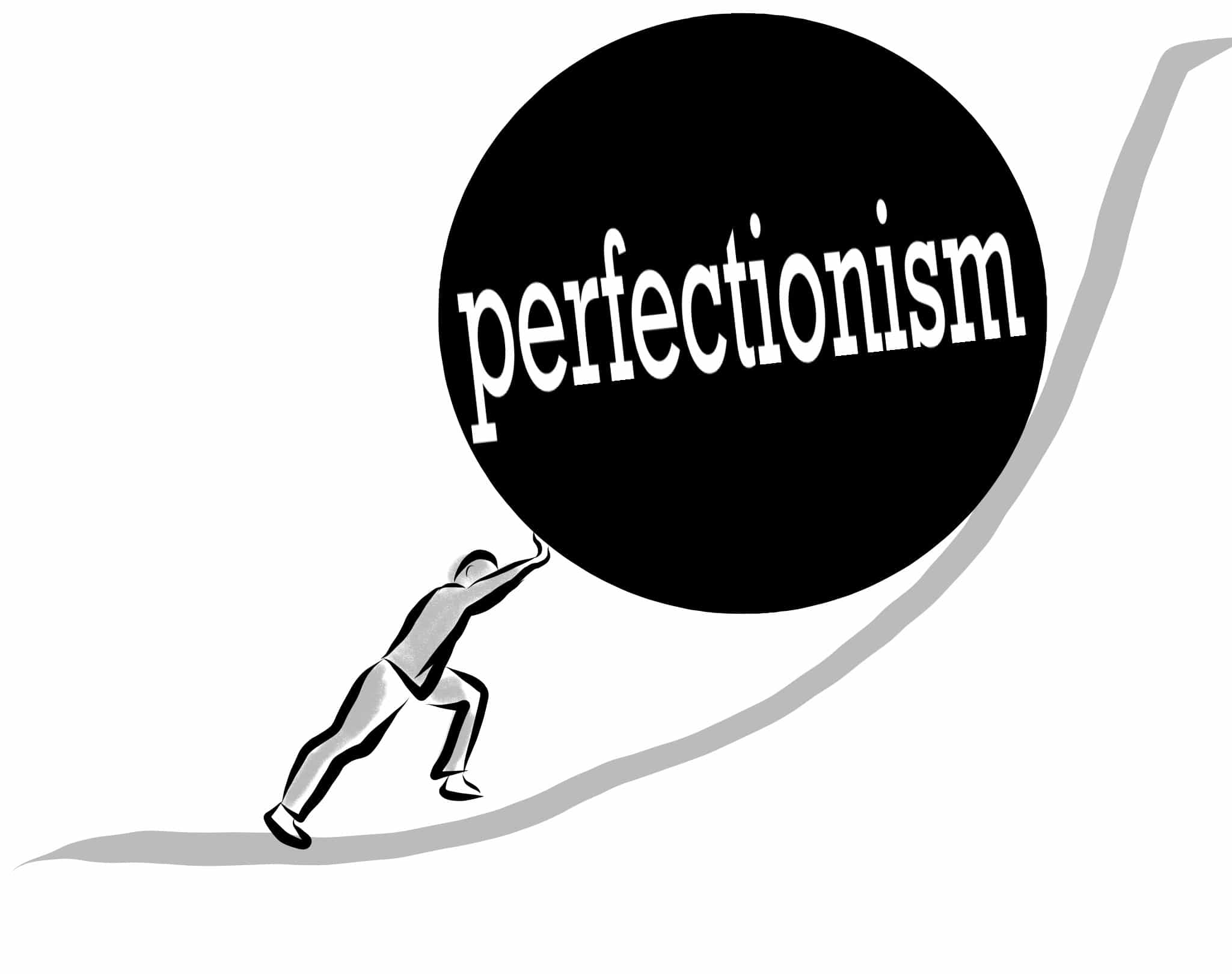
Perfectionism is not really about excellence; it is about protection from shame, fear of failure, and intolerance of uncertainty, and the behaviour produces short-term relief at long-term cost.
ADHD hyperfocus is not enhanced attentional control; it is reduced attentional shifting, which makes it hard to stop, pivot, or respond to priorities even when the immersion looks productive.
OCD behaviours that look like discipline are actually compulsions; the person checks not to improve performance but because not checking produces unbearable discomfort.
A real strength gives you more options; a maintained problem narrows your options while producing enough output to disguise what is happening.
Perfectionism, ADHD, and OCD are not superpowers, despite what a growing wave of online content suggests. Each of these patterns can look productive from the outside, and each has been rebranded as a hidden strength in ways that feel validating to the person carrying it. The problem is that the rebrand obscures what is actually happening underneath, which in all three cases is behaviour organised around avoiding internal experience rather than moving toward what the person actually wants. Calling them superpowers feels good in the moment and quietly hides the cost, which is usually a slowly narrowing life.
I'm Dr Rick Smith, PsyD | EdD, a clinical psychologist in Hong Kong working with high-performing teens, executives, and international school families on perfectionism, ADHD, OCD, and anxiety. The superpower framing comes up in almost every first session with someone who has been doing their own research online before booking. I understand why it appeals; it reduces shame, creates identity, and offers relief after years of feeling misunderstood. The reason I push back on it gently is that the reframe usually slows down the work people actually need to do.
Why is perfectionism not a superpower?
Perfectionism is not a superpower because it is not really about excellence. Clinically, it is about protection. The excessive rechecking, revising, and overthinking that perfectionists describe as caring about quality are usually attempts to prevent contact with difficult internal experiences: shame, self-judgement, fear of failure, fear of criticism, and intolerance of uncertainty. The behaviour produces short-term relief by warding off these experiences, which is why it persists, but it produces long-term cost because the person never gets the corrective experience of discovering that mistakes are survivable, that good enough is often acceptable, and that uncertainty can be tolerated. Their threat system stays intact, and the perfectionism intensifies over time rather than reducing. Perfectionism is not a formal disorder on its own, but it appears as a feature inside OCD, eating disorders, and anxiety disorders, and the underlying mechanism is the same regardless of diagnosis: behaviour organised around preventing discomfort rather than moving toward valued action. This is the textbook definition of experiential avoidance in acceptance and commitment therapy, and it is one of the more reliable predictors of clinical difficulty even when the surface looks like ordinary high standards. For people whose perfectionism has become an anxiety management strategy, the goal is not to lower standards. It is to develop the flexibility to pursue excellence without needing perfection, to complete a task while allowing the possibility of mistakes to exist alongside it. This is harder than it sounds, which is part of what distinguishes it from a superpower.
Why is ADHD hyperfocus not a superpower?
ADHD hyperfocus is not a superpower because it is not actually enhanced attentional control. It is reduced attentional shifting, which is a different thing and produces different consequences. A person with ADHD who hyperfocuses on a task for six hours is not exercising extraordinary concentration; they are having difficulty disengaging from a task that has captured their attention through immediate reinforcement, usually interest, novelty, or reward. The persistence is not voluntary, and the same mechanism that allows the impressive immersion also makes it hard to stop when the task stops being useful, transition to higher-priority responsibilities, respond to external demands like time or other people, or notice basic needs like hunger and fatigue. When the task aligns with the person's goals and the timing works out, the outcome looks productive, and this is where the superpower story comes from. When flexibility is required, the same mechanism becomes a problem. From a cognitive perspective, hyperfocus reflects a breakdown in task-switching and cognitive flexibility, both core executive function domains that ADHD affects. From an ACT perspective, it is a form of stuckness where behaviour is governed by immediate reinforcement rather than by chosen direction or values. The clinical goal in ADHD and executive function work is not to reduce someone's ability to engage deeply. It is to increase flexible control over attention, so the person can both engage and disengage on purpose rather than by accident of what their nervous system happened to find interesting. The superpower framing minimises the genuine impairment ADHD produces in daily life, which is why people who lean into it often arrive at clinical work years later than they would have benefited from starting.
Why is OCD not a superpower?
OCD is not a superpower because the behaviours that look like discipline, organisation, and high standards are actually compulsions, and compulsions are attempts to reduce anxiety rather than expressions of care about quality. The person who rechecks and rechecks does not believe rechecking will improve their performance. They check because not checking produces unbearable discomfort, and the temporary relief that follows the compulsion is what keeps the cycle going. Over time, the same loop traps the person in behaviours that make their life smaller rather than better. Tasks take longer, decisions become harder, relationships strain under reassurance-seeking or rigid routines, and what began as an attempt to feel safe becomes the thing that makes daily life exhausting. OCD is genuinely different from being orderly or particular. The defining feature is not the content of the obsessions or the form of the compulsions; it is the loop, where an intrusive thought produces distress, the person performs an action to neutralise the distress, the relief reinforces the action, and the brain learns to repeat the cycle. Treatment is not about teaching people to care less. It is about helping them develop a different relationship with uncertainty, where actions are guided by values rather than by the work of reducing fear. The proven path is exposure and response prevention, which interrupts the loop directly rather than exploring the content of the thoughts. For people whose patterns fit this description, specialist OCD and intrusive thoughts treatment usually moves faster than they expect once the goal shifts from controlling the thoughts to changing the relationship with them.
What do all three patterns have in common?
All three share the same underlying mechanism, which is why the same superpower rebrand applies to all of them and why the rebrand is misleading in all three cases. Perfectionism, ADHD hyperfocus, and OCD compulsions are each forms of behaviour that produce visible short-term output (a perfect-looking deliverable, a deeply immersed work session, a meticulously organised system) while quietly costing the person flexibility, choice, and the capacity to move toward what they actually want when the moment requires it. The surface productivity is real in each case, which is what makes the superpower framing seductive. Underneath, the behaviour is being driven by something the person is trying to avoid feeling, whether that is the shame of imperfect work, the discomfort of switching tasks before the dopamine hit lands, or the anxiety of an uncertain outcome. The cost is the same: the person's life slowly organises around the avoidance rather than around their values, and the avoidance feels like effort rather than escape because it produces output. This is the diagnostic move that distinguishes a strength from a maintained problem. A strength gives the person more options. A maintained problem narrows their options while producing enough output to disguise what is happening.
How do you tell the difference between a real strength and a maintained problem?
Four questions usually clarify the distinction. The first is whether the behaviour produces choice or eliminates it. A real strength expands what is available to you. A maintained problem narrows what is available even when it looks productive from the outside. The second is what happens when you try to stop. If the behaviour is a strength, stopping is uncomfortable but manageable. If it is a maintained problem, stopping produces a level of distress that feels disproportionate to what is actually happening, and the urge to resume becomes hard to resist. The third is whether the cost is showing up elsewhere. A real strength is usually visible in multiple areas of life. A maintained problem produces output in one domain while quietly costing the person in sleep, relationships, mood, or basic self-care. The fourth is what the behaviour is moving you toward. A real strength is connected to something you actually value. A maintained problem is connected to something you are trying to avoid feeling, and the avoidance has become the destination. Asked together, these four questions tend to clarify the picture within about ten minutes for most people, and the clarification is often what makes the next move obvious. Treatment for any of the three patterns is not about teaching people to care less, work less, or aspire less. It is about helping them develop the flexibility to engage and disengage on purpose, the tolerance to sit with the discomfort that drives the behaviour, and the capacity to choose action based on what they actually want rather than what they are trying to escape.
The honest summary is that the superpower narrative for perfectionism, ADHD, and OCD feels validating because it reduces shame and creates identity, but it does so by hiding the cost of behaviour that is actually maintaining a problem rather than expressing a strength. The work that produces real change is not about losing your standards, your ability to focus deeply, or your attention to detail. It is about developing the flexibility to use these capacities on purpose, with choice, in service of what you actually want, rather than being run by them in service of what you are trying to avoid.
Frequently Asked Questions
Is perfectionism actually a strength?
Clinically, perfectionism is not really about excellence; it is about protection from difficult internal experiences like shame, self-judgement, fear of failure, and intolerance of uncertainty. The excessive rechecking and revising perfectionists describe as caring about quality are usually attempts to prevent contact with these feelings. The behaviour produces short-term relief but long-term cost because the person never gets the corrective experience that mistakes are survivable and good enough is often acceptable.
Is ADHD hyperfocus a superpower?
No, hyperfocus is not enhanced attentional control; it is reduced attentional shifting, which is a different thing. The person is not exercising extraordinary concentration. They are having difficulty disengaging from a task that has captured their attention through immediate reinforcement. The same mechanism that allows the impressive immersion also makes it hard to stop, switch tasks, respond to external demands, or notice basic needs. When the task happens to align with goals, the outcome looks productive. When flexibility is required, it becomes a problem.
Is OCD just being organised and detail-oriented?
No, OCD is fundamentally different from being orderly or particular. The behaviours that look like discipline are actually compulsions, attempts to reduce anxiety rather than expressions of care about quality. The defining feature is the loop: an intrusive thought produces distress, the person performs an action to neutralise the distress, the relief reinforces the action, and the brain learns to repeat the cycle. Over time, the loop traps the person in behaviours that make their life smaller, not better.
Why do people call these conditions superpowers online?
Because the rebrand reduces shame, creates identity, and offers relief after years of feeling misunderstood. It also produces visible short-term output that looks like a strength from the outside: a perfect deliverable, an immersed work session, a meticulously organised system. The framing is seductive precisely because the surface productivity is real. Underneath, the behaviour is being driven by something the person is trying to avoid feeling, and the cost is showing up elsewhere even when the productivity is visible.
How can I tell whether one of my patterns is a real strength or a maintained problem?
Four questions usually clarify it. Does the behaviour produce choice or eliminate it? What happens when you try to stop, and is the distress proportionate? Is the cost showing up elsewhere, in sleep, relationships, mood, or self-care? What is the behaviour moving you toward, something you actually value or something you are trying to avoid feeling? A real strength gives you more options; a maintained problem narrows your options while producing enough output to disguise what is happening.
What does treatment actually look like for these patterns?
Treatment is not about teaching people to care less, work less, or aspire less. It is about developing the flexibility to engage and disengage on purpose, the tolerance to sit with the discomfort that drives the behaviour, and the capacity to choose action based on what you actually want rather than what you are trying to escape. The specific approach depends on the pattern: exposure and response prevention for OCD, executive function and cognitive flexibility work for ADHD, and acceptance-based work with values clarification for perfectionism.
Author bio
I'm Dr. Rick Smith, a clinical psychologist in Hong Kong working with high-performing teens and adults on ADHD, anxiety, OCD, addiction, and executive functioning. My work draws on Acceptance and Commitment Therapy, Cognitive Behavioural Therapy, and Exposure and Response Prevention, applied to international school families and the expatriate community.
Before psychology, I spent nearly two decades in classrooms supporting students with learning differences. I'm the author of STOP Reading (4.8 stars on Amazon) and deliver workshops for schools and organisations across the region. More atrick-smith.com.