
Professionals stay stuck in high stress because stress signals meaning and belonging. Reducing it can feel like reducing identity, not just workload size.


Key Takeaways
Professionals stay stuck in high stress because the same patterns that produce career success, perfectionism, overwork, identity tied to performance, also block the change that would reduce the stress.
Stress is rarely a workload problem alone; it is usually a values misalignment problem, a boundary problem, or an emotional regulation problem that the workload is amplifying.
Time-management interventions for chronic professional stress often fail because they treat the symptom rather than the structural pattern underneath.
The leverage point for most stuck professionals is not working less but working in a way that aligns with what they actually value rather than what their performance identity requires.
Sustainable change usually requires looking at the function the high-stress pattern is serving, not just the cost it is producing.
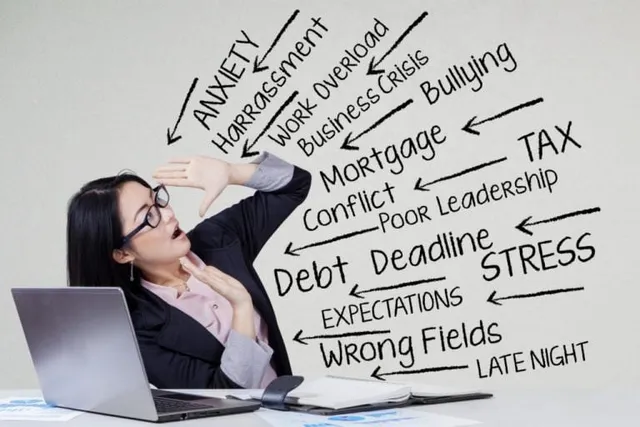
Professionals stay stuck in high stress because stress is not only a burden; it is also a signal of meaning, belonging, and engagement, which means reducing it can feel like reducing identity rather than just reducing workload. Most executives who say they want less stress would, in practice, find themselves disoriented by its absence. The real problem is rarely the total volume of stress; it is the unmanageable mix of planned and unplanned stress, and the way work cultures use stress as the language of belonging.
I'm Dr Rick Smith, PsyD | EdD, a clinical psychologist in Hong Kong working with executives, professionals, and high-performing adults on burnout, anxiety, performance psychology, and the practical question of how to keep performing without breaking. A large share of my caseload arrives saying they want less stress, and almost none of them actually want what they are asking for. The honest conversation that follows is usually the start of the work.
Why does saying you want less stress rarely lead to less stress?
Saying you want less stress rarely produces less stress because the request itself is usually a translation of something else. When a high-functioning professional says I'm stressed, they often mean my workload is unpredictable, I'm cut off from the people I trust at work, the things I'm doing don't feel meaningful right now, or I cannot find space to recover. None of those is solved by simply reducing the number of items on the calendar. The deeper layer is that stress, for many professionals, has become part of the social contract. To say you are stressed is to signal that what you are doing matters, that you are committed to the team, that you are not coasting. To say you are calm in a high-pressure environment can read as detachment, even when it is competence. Until that translation is understood, attempts to reduce stress tend to feel hollow, because the professional is removing the wrong variable. Real change starts when the question shifts from how do I have less stress to what kind of stress is helping me and what kind is wearing me down, and what is the stress doing for me socially that I would need to replace if it were gone.
What is the difference between planned stress and unplanned stress?
Planned stress is stress you signed up for; unplanned stress is stress that ambushes you. The distinction is one of the most useful in performance psychology, and it is the variable most professionals are getting wrong. Planned stress is the demand of training for a marathon, leading a project you chose to lead, preparing for a board presentation you have time to rehearse, or raising children. It is taxing but it is bounded, predictable, and connected to something you care about, which means the body's stress response can do its actual job: sharpen focus, mobilise resources, and recover afterward. Unplanned stress is the late-night email that hijacks tomorrow's plan, the colleague's missed deadline that now becomes your weekend, the shifting expectation from a senior leader that resets everything you prioritised. The body's stress response was not designed for an unpredictable, chronic drip of small ambushes, and research on allostatic load is consistent that the cumulative cost of unmanaged unpredictability is what damages cardiovascular, immune, and cognitive function over years. The professionals I see in executive burnout coaching are almost never burned out by their planned stress; they are burned out by the unplanned stress that has eaten the time they needed to recover from the planned stress. Sorting one from the other is usually the first move that produces visible change.
Why is stress a social signal as much as a physiological state?
Stress is a social signal because in most high-pressure workplaces, talking about how busy and stressed you are is how membership in the group is performed. Saying I'm stressed often means what I'm doing matters, I'm carrying my weight, I'm in this with you. Saying I'm calm and well-paced can be heard as I am not invested, I am not pulling hard enough, I am protecting myself in a way the rest of the team is not. This is one of the most under-recognised mechanisms keeping professionals stuck in high-stress patterns even when individual stress-management interventions are available. The social dimension of stress is at least as predictive of burnout as the workload itself; people will tolerate extraordinary pressure if the cause feels meaningful and the team feels close, and will burn out at modest workloads if they feel isolated and the work feels disconnected from anything they value. This matters practically because most stress-reduction advice is individual, meditate more, work less, take breaks, while the actual driver is collective. Trying to reduce stress in an environment that punishes calmness is not a willpower problem; it is a systems problem. Treating it as a willpower problem is one of the more reliable ways to make burnout worse, because the professional now adds shame to the original stress.
What actually works for professionals stuck in chronic stress?
Four moves work in combination, and almost none of them work alone. The first is sorting your stress by source, distinguishing planned stress that is doing useful work from unplanned stress that is consuming the recovery time your planned stress requires. Most professionals discover that fifty percent of what they call stress is actually unplanned drift they have stopped noticing as separate from the meaningful work. The second move is structural protection of the unplanned stress channels: scheduled email windows rather than continuous monitoring, calendar buffers between meetings rather than back-to-back blocks, explicit recovery time after high-intensity periods. None of this requires changing the workload; it requires changing the predictability. The third move is reconnecting individual stress to specific meaning, because stress without meaning is corrosive but stress in service of values is sustainable. The fourth move is the relational layer, building enough trusted relationships at work that stress becomes a shared signal rather than an isolating one. Most of the work I do with professionals managing chronic work stress happens at the intersection of these four. A short course of coaching, three to six months for most adults, usually moves things that years of individual stress-management techniques have not.
When does chronic stress become burnout, and when should you bring in support?
Chronic stress tips into burnout when three things appear together: exhaustion that does not recover with normal rest, cynicism or emotional distance from work that previously mattered, and a felt sense of reduced effectiveness even when output is technically maintained. The Maslach model that has shaped most clinical thinking on this identifies these three as the defining triad, and they are reliable enough to use as a personal check. Hold the line on self-management when the picture is intense but bounded, when recovery still happens on weekends, when you still feel connected to the work, and when sleep and mood are mostly intact. Bring in professional support when exhaustion has stopped responding to the rest you can give yourself, when cynicism has begun shaping how you treat people you used to care about, when you have started fantasising about leaving more than thinking about how to fix it, or when physical symptoms, sleep disruption, persistent low mood, anxiety that does not settle, have become regular features. Most of the executives and professionals I see arrive far later than they should have, because the rule about being able to handle things was running until the body forced the question. Earlier is almost always shorter than later. A first conversation usually clarifies, in 30 minutes, whether what you are managing is sustainable or whether the cost of waiting another six months will be larger than the cost of starting the work now.
The honest summary is that professionals stay stuck in high stress because the stress is doing real work for them socially, identifically, and motivationally, and removing it without addressing those functions leaves a vacuum that pulls the stress back in. The work is not about having less stress; it is about having better stress, predictable, meaningful, shared, with enough recovery built in for the body to do what it is supposed to do. If you have been managing rather than addressing this for a long time, that pattern is usually worth following. A short course of coaching is almost always faster than another year of getting through it, and the difference is visible in the body long before it is visible in the calendar.
Frequently Asked Questions
Why do professionals stay stuck in high stress even when they want less of it?
Because stress is doing real work for them beyond the workload. It signals meaning, marks belonging in high-pressure teams, and supplies a sense of being engaged and important. Removing the stress without addressing those underlying functions creates a vacuum that pulls the stress straight back in. Sustainable change requires understanding what the stress is doing socially and motivationally, not just how to reduce it.
What is the difference between planned and unplanned stress?
Planned stress is stress you signed up for, bounded, predictable, and tied to something you care about, like training for a marathon or leading a project. Unplanned stress is the unpredictable drip of late-night emails, missed deadlines, and shifting expectations that ambush your calendar. Research on allostatic load suggests it is the unpredictable chronic stressors that do the most damage over time, not the planned ones.
Why is workplace stress so social?
Because in high-pressure environments, talking about being busy and stressed is how membership in the team is performed. Saying I'm stressed signals that what you are doing matters and that you are in it with the group. Saying I'm calm can be read as detachment. This social dimension is at least as predictive of burnout as the workload itself.
What actually reduces chronic stress for high-performing professionals?
Four moves used in combination: sorting stress by source so planned work is separated from unplanned drift, structurally protecting the unplanned stress channels through email windows and calendar buffers, reconnecting individual stress to specific meaning, and building enough trusted relationships at work that stress becomes shared rather than isolating. Individual stress-management techniques rarely work without the structural and relational layers.
When does chronic stress become burnout?
Burnout appears when three features cluster together: exhaustion that does not recover with normal rest, cynicism or emotional distance from work that used to matter, and a felt sense of reduced effectiveness even when output is technically maintained. This triad, established by Christina Maslach's research, is the standard clinical marker. Catching it at the cluster stage is much faster to address than catching it at the collapse stage.
When should I bring in professional support for work stress?
When exhaustion has stopped responding to the rest you can give yourself, when cynicism has begun shaping how you treat people, when you have started fantasising about leaving more than thinking about how to fix things, or when physical symptoms like sleep disruption, low mood, or persistent anxiety have become regular features. A short course of coaching is almost always faster than another year of management without intervention.
Author bio
I'm Dr. Rick Smith, a clinical psychologist in Hong Kong working with high-performing teens and adults on ADHD, anxiety, OCD, addiction, and executive functioning. My work draws on Acceptance and Commitment Therapy, Cognitive Behavioural Therapy, and Exposure and Response Prevention, applied to international school families and the expatriate community.
Before psychology, I spent nearly two decades in classrooms supporting students with learning differences. I'm the author of STOP Reading (4.8 stars on Amazon) and deliver workshops for schools and organisations across the region. More at rick-smith.com.