
Perfectionism causes procrastination because tasks that matter most threaten self-worth, and not starting protects the self from a feared judgement of inadequacy.


Key Takeaways
Perfectionism causes procrastination because tasks that matter most threaten self-worth, and not starting protects you from a feared judgement of your ability.
The procrastination is not a discipline problem; it is an emotional avoidance pattern in which delaying the task is also delaying the verdict.
Lowering your standards is not the fix; the fix is being able to complete imperfect work without the imperfection feeling like a personal indictment.
Time-management techniques applied to perfectionism without addressing the underlying anxiety usually produce short-term gains that do not hold.
Most adults who recognise this pattern benefit from a combined approach that addresses both the behavioural patterns of procrastination and the perfectionism underneath.
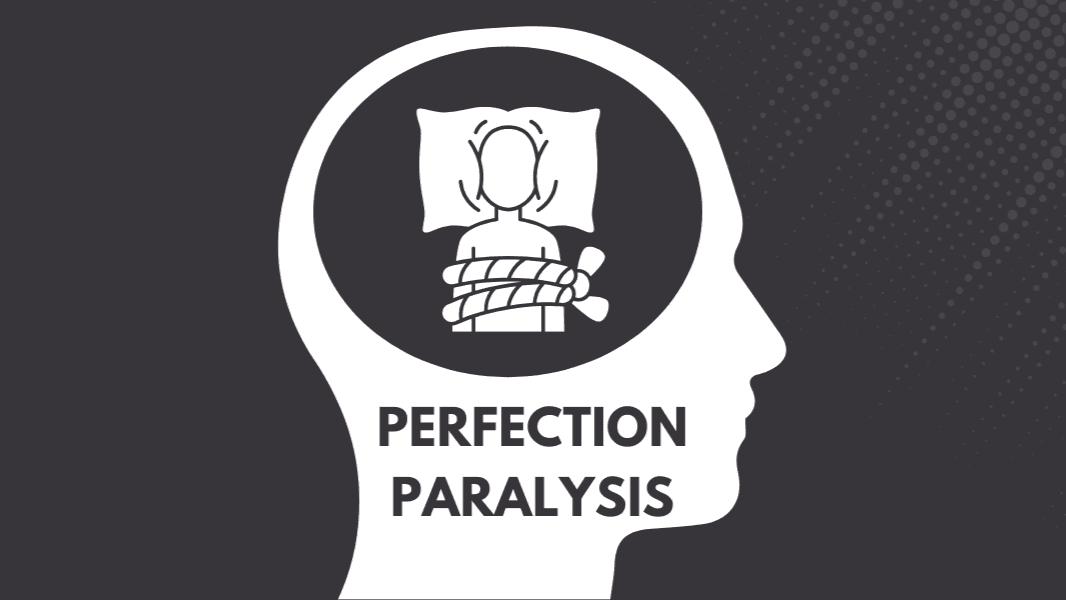
Perfectionism causes procrastination because the tasks that matter most are the ones that threaten self-worth most, and not starting is a way to protect the self from a feared judgement of inadequacy. The procrastination is not laziness, lack of discipline, or weak time management. It is avoidance disguised as standards. Telling a perfectionist to lower their standards almost never works, because the standards are not the real driver. The fear of being seen as not enough is the driver, and that is the layer the work has to reach.
I'm Dr Rick Smith, PsyD | EdD, a clinical psychologist working in Hong Kong with high-performing teens and adults on anxiety, performance psychology, and the everyday paralysis that hides inside high achievement. A substantial portion of the executives, professionals, and international school students I see arrive describing themselves as procrastinators. Almost none of them actually are. They are perfectionists who have learned to mislabel their fear as a planning problem.
Why is perfectionism not the same as having high standards?
Research on perfectionism distinguishes two related but very different patterns. One is the genuine pursuit of excellence, sometimes called perfectionistic strivings, which involves high standards a person is actively working toward and which produces sustained engagement with hard tasks. The other is perfectionistic concerns, which is dominated by fear of judgement, fear of inadequacy, and a felt sense that any imperfect outcome will reveal something defective about the self. The strivings pattern tends to look like high performance over time. The concerns pattern tends to look like high performance interrupted by mysterious bouts of paralysis, particularly on the tasks that matter most. The two are not opposites, and most perfectionists carry some of each, but the mix matters. People weighted more toward strivings tend to finish things even when they are anxious about them. People weighted more toward concerns tend not to start, or to start endlessly without ever moving toward completion, because completion is the moment at which the work becomes judgeable. That moment is precisely what the procrastination is protecting against.
How does the perfectionism-avoidance loop actually work?
It runs in four steps, and once you can see it, it is hard to unsee. First, a task arrives that matters. Second, the imagined version of the finished task, sharp, accurate, impressive, becomes the standard against which any actual attempt will be measured. Third, beginning the work means risking the gap between the imagined version and what the person can actually produce on a Tuesday afternoon, with the noise of real life and the constraints of real time. Fourth, that gap feels intolerable, so beginning gets postponed, often with a rational-sounding cover story; I need more research, I am waiting for the right mood, I will start when I have a clear block. The cover stories all share one feature: they preserve the imagined version intact, because the work has not yet been compared to it. As long as nothing has been produced, the imagined version is still possible. The moment anything is produced, the imagined version dies, and the actual version, which is always smaller, has to be lived with. This is why perfectionists procrastinate most on the work they care about most. The stakes are not deadlines or grades, the stakes are who they get to think they are. The longer the avoidance runs, the more the anxiety that drives the loop tightens, and the harder starting becomes, until even small tasks feel impossible.
Why does just lower your standards never work?
Because the standards are not the actual problem. They are the visible part of a deeper system, and dismantling the visible part without touching the deeper part leaves the person feeling worse, not better. Telling a perfectionist to lower their standards is roughly equivalent to telling someone with a fear of flying to stop being so anxious. It identifies the surface correctly and offers nothing operational. The deeper system has two components. The first is the conditional self-worth structure: I am worthwhile if my output is impressive, and I am not if it is not. The second is the protection strategy that has built up around it: avoidance, procrastination, and the elaborate planning rituals that often substitute for actual work. You cannot dismantle the protection strategy without addressing the underlying conditional self-worth structure, because the protection strategy is doing important emotional work. If you remove the avoidance without changing what the avoidance is protecting against, you simply expose the person to the threat the avoidance was managing. They will rebuild the avoidance, or they will burn out trying to work without it. The change that actually holds is changing what the work is for. Not work to prove I am acceptable, but work in service of something the person actually cares about, with imperfection built into the design rather than feared as a verdict on the self.
How do ACT defusion and structured action restore momentum?
Two interventions, used together, do more for perfectionistic paralysis than almost anything else in standard therapy. The first is cognitive defusion, which is the ACT term for learning to have a thought without being run by it. Perfectionists typically experience their self-critical thoughts as facts, including things like this is terrible, I am behind, they will see I do not know what I am doing. The defusion work is not to argue with those thoughts, which usually fails, but to change the relationship with them, so they become something the person notices rather than something the person obeys. The shift from this is terrible to I am noticing the thought that this is terrible sounds small. In practice, it is the difference between starting and not starting. The second intervention is structured action, which is the behavioural side. Once the thoughts have less grip, the person can deliberately set up small experiments in which something is produced quickly, imperfectly, and on purpose. A first draft that is allowed to be bad. A rough version submitted before the polished version would have been ready. A presentation outline shared at half the usual detail. The point is not that the work is poor. The point is to test, in the only way that actually convinces a perfectionist nervous system, that producing imperfect work does not produce the catastrophe it has been bracing for. After a few rounds, the bracing eases. The work flow comes back. For people whose perfectionism shows up most around important deliverables, this is usually the protocol that produces visible change inside a month, sometimes faster. For executives and high performers whose identity is built around output, defusion plus structured action is also where most of the work happens.
Is this perfectionism or anxiety, and which should you target first?
There is no clean line. Perfectionism and anxiety overlap heavily, and most of the people I see who arrive describing themselves as anxious are perfectionists running the avoidance side of perfectionism, and most of the people who arrive describing themselves as perfectionists meet criteria for generalised anxiety as well. The clinical question is which presentation is interfering most with daily life and which is more accessible as a starting point. If the dominant feature is rumination, sleep disruption, somatic anxiety symptoms, and a sense of being overwhelmed across many domains, treat the anxiety first; the perfectionism will be more workable once the baseline arousal comes down. If the dominant feature is paralysis on specific high-stakes tasks, identity tied tightly to output, and a pattern of avoidance dressed up as preparation, treat the perfectionism directly with ACT defusion and structured action; the anxiety will reduce alongside it. For most adults and students I see, the answer is both, in parallel, with the weighting determined by which presentation is doing more damage at the time. The decision is less about diagnosis and more about leverage. The right place to start is wherever the smallest intervention will produce the largest visible movement, and that is usually obvious within a session or two.
If you have been calling yourself a procrastinator and quietly suspecting it is more than that, you are probably right. Perfectionism that looks like procrastination is one of the more common patterns I work with, and it is also one of the more responsive to focused treatment. The work usually does not require years. It requires a clear read of the loop, a few months of deliberate practice, and a willingness to make smaller, less polished things in the world long enough for the nervous system to recalibrate. After that, most people I see do not need ongoing therapy. They need the protocol once, applied well, with someone who has seen the pattern many times before.
Frequently Asked Questions
Is perfectionism just having high standards?
No. Genuine high standards usually produce sustained engagement and finished work. Perfectionism, particularly the fear-driven version, often produces avoidance and unfinished work, because the imagined perfect version of the task feels threatened by any actual attempt. People with truly high standards still ship things; people with perfectionistic fear of judgement often do not.
Why do I procrastinate most on the things I want to do well?
Because those are the tasks where being judged inadequate would feel most threatening. The procrastination is protective, not lazy. It preserves the imagined perfect version of the work by preventing the actual imperfect version from ever existing. The procrastination is doing important emotional work, which is why willpower alone rarely shifts it.
Does just lowering my standards actually help?
Almost never, because the standards are not the real driver. The real driver is conditional self-worth, the felt sense that being acceptable depends on producing impressive output. Lowering the standards without changing that underlying structure usually leaves a perfectionist feeling worse, not better, because nothing has actually addressed the threat the standards were defending against.
What actually works for perfectionism-driven procrastination?
The combination that produces the most reliable change is cognitive defusion, the ACT technique of learning to have self-critical thoughts without being run by them, paired with structured action, deliberately producing small, imperfect, on-purpose pieces of work to test the prediction that imperfection will produce catastrophe. Most people see visible change within a month when both pieces are in place.
Is perfectionism the same as anxiety?
They overlap heavily but they are not identical. Many anxious people are running the avoidance side of perfectionism, and many self-identified perfectionists meet criteria for generalised anxiety. The clinical decision is usually which presentation is doing more damage and which is more accessible to start with, rather than which label is technically correct. The two tend to move together once treatment is in place.
When should I talk to a clinician about this rather than push through?
When the pattern is now interfering with work, relationships, or wellbeing; when procrastination on important tasks has become predictable rather than occasional; when the cost of avoidance is now larger than the cost of beginning; or when previous attempts to push through have ended in burnout or repeated cycles of paralysis and recovery. A focused course of work usually shifts this in months, not years.
Author bio
I'm Dr. Rick Smith, a clinical psychologist in Hong Kong working with high-performing teens and adults on ADHD, anxiety, OCD, addiction, and executive functioning. My work draws on Acceptance and Commitment Therapy, Cognitive Behavioural Therapy, and Exposure and Response Prevention, applied to international school families and the expatriate community.
Before psychology, I spent nearly two decades in classrooms supporting students with learning differences. I'm the author of STOP Reading (4.8 stars on Amazon) and deliver workshops for schools and organisations across the region. More at rick-smith.com.