
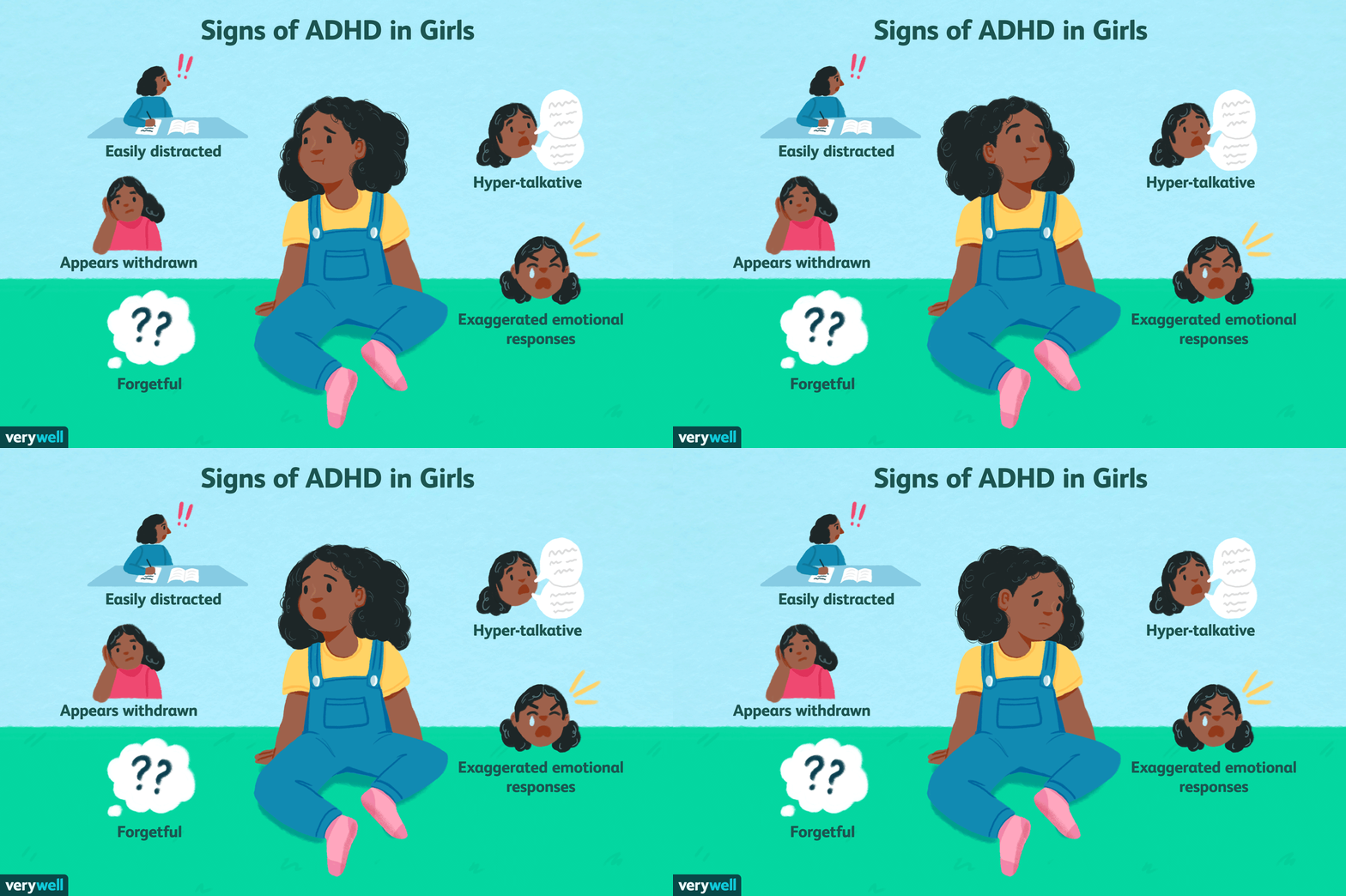
ADHD in women and girls is mostly inward: inattention rather than disruption, internal restlessness rather than hyperactivity, and years of being treated for anxiety first.


Key Takeaways
ADHD in women and girls is mostly inward: inattention rather than disruption, internal restlessness, and years of being treated for anxiety before ADHD is even considered.
Many women receive an ADHD diagnosis in their thirties or forties, often after their child is diagnosed and they recognise the same pattern in themselves.
The internalised presentation means women with ADHD often look high-functioning on the outside while expending enormous effort to mask the difficulty.
Hormonal changes across the menstrual cycle, pregnancy, postpartum, and perimenopause meaningfully affect ADHD symptoms in ways the standard literature has historically underweighted.
Late-diagnosed women often need both treatment for the ADHD itself and recovery from years of internalised self-criticism about why they could not manage what looked easy for others.
Telling yourself that other people have it worse does not shrink your stress; it prolongs it. The thought sounds humble in the moment but functions as avoidance: it dismisses what you feel without addressing what produced it, which leaves the stress in place and adds guilt on top of it for feeling it at all. Pain is not ranked. Your nervous system registers exhaustion, anxiety, and grief regardless of how someone else's situation compares to yours, and treating the comparison as a verdict on whether you are allowed to feel something does measurable damage over time.
I'm Dr Rick Smith, PsyD | EdD, a clinical psychologist in Hong Kong working with high-functioning adults, executives, and parents on anxiety, burnout, and the quiet self-dismissal that is over-represented in people whose lives look fine from the outside. The pattern of minimising your own experience because someone else has it worse is one of the most consistent things I see in capable people, and one of the most consistently overlooked by them.
What is your brain actually doing when you say others have it worse?
The brain is performing a protective manoeuvre that has nothing to do with perspective. On the surface, comparing your stress to someone else's looks like an act of humility or proportion. Underneath, it is usually doing one of four jobs. The first is shielding you from vulnerability; if you can dismiss your pain before someone else does, you reduce the risk of being seen as needy and unsupported. The second is preserving a self-image of being capable, low-maintenance, or the one who can handle things, which is often tied to identity and feels too costly to question. The third is echoing early learning, particularly for adults who heard stop crying, others have it worse as children and absorbed it as a rule for adult life. The fourth is fear of seeming selfish, especially in people whose moral identity is built around caring for others; admitting your own difficulty can feel like betrayal of the value system. None of these functions are about perspective. All of them are about managing the discomfort of letting your own experience count. Once you can see what the thought is actually doing, the question shifts from is it true to is it useful, and the answer is almost always no.
Why does minimising your stress make it last longer instead of shorter?
Minimising stress makes it last longer because dismissal blocks the response the stress requires to resolve. Stress is information; it is your nervous system flagging that something is taxing more resources than it should. Acknowledging the signal allows you to act on it, rest, ask for help, change the situation, lower the load. Dismissing the signal suppresses the action without removing the demand. The stress remains, the body keeps responding to it, and the only thing missing is the corrective behaviour. Over weeks and months this is how high-functioning people land in burnout. The signals were there the whole time; the rule about ranking pain just made them inadmissible. The other cost is delayed help-seeking. Most of the executives and high-performing adults I see arrive in burnout far later than they should have, because their internal voice has been telling them for a year that compared to other people, they have nothing to complain about. By the time they walk in, the problem is no longer manageable on its own, and the recovery is correspondingly longer than it would have been if the signal had been honoured when it first appeared.
What is the validation-avoidance loop?
The validation-avoidance loop is the cycle where minimising your own stress prevents the support that would have reduced it, which intensifies the stress, which triggers more minimisation. It works in four stages, and once you can name the stages, you can usually catch yourself somewhere in the middle. Stage one: a real difficulty produces a real internal signal. Stage two: the signal is met with comparison rather than acknowledgement, others have it worse, this should not bother me, what right do I have. Stage three: because the signal has been dismissed rather than acted on, no one around you knows you are struggling, and you have not asked for the change, rest, or help that would lower the load. Stage four: the unaddressed stress accumulates, the body's response intensifies, and the rule that produced the dismissal in the first place tightens; if I am this overwhelmed despite having less to deal with than others, I must be even more weak than I thought. The loop runs faster the longer it goes, and it is particularly aggressive in people whose identity is built around capability. Anxiety is often what eventually breaks the loop open, because it produces symptoms loud enough that the dismissal stops working, and the person has to acknowledge that something is going on whether or not the comparison says they should.
What does ACT acceptance actually look like in practice?
ACT acceptance is letting your experience count without ranking it. It is not positive thinking, it is not self-pity, and it is not telling yourself the situation is fine when it is not. It is the simple, harder move of acknowledging what is true about your internal state without immediately disputing whether you are entitled to feel that way. In practice this sounds like three sentences, used together, that change the relationship between the stress and the rest of your life. The first is naming what is happening, this is hard, I am exhausted, I am worried about X. The second is letting the comparison thought arrive without acting on it, the thought that others have it worse is here, and it does not change what I am feeling. The third is asking what one useful next step would be, given the situation, not given what you think the situation should be. None of this is dramatic. There is no breaking down required, no permission to wallow, no abandonment of compassion for other people. The shift is small and largely internal, but the downstream effect on what you ask for, what you change, and how long the stress lasts is large. Research on self-compassion is consistent on one point: people who validate their own struggles are more able to show genuine care for others, not less. The choice between honouring your experience and being useful to other people is a false binary that the dismissal pattern keeps alive.
How can you acknowledge stress without amplifying it?
The line between acknowledgement and amplification is narrower than people assume, and the difference between the two is action, not duration. Acknowledge stress when you notice the signal, briefly, before deciding what to do about it. Amplify it when you stop at acknowledgement and start rehearsing the difficulty in increasing detail without moving toward any change. Two questions reliably hold the line. The first is what is one thing I would do if I let myself take this seriously? The answer is usually small, sleep more this week, cancel one commitment, tell a specific person, schedule a difficult conversation, see a clinician, and the smallness is what makes it workable. The second is what would I say to a friend in this situation? If the answer to that question is gentler, more accurate, and more useful than what you are saying to yourself, that is information about the rule rather than information about the situation. Acknowledge briefly, act once, repeat. That sequence does more for chronic minimisation than years of insight without action. For most of the high-functioning adults I work with, the structure of treatment is not learning new skills; it is dismantling the rule that they were not allowed to use the skills they already had on themselves.
The pattern of telling yourself other people have it worse is one of the most common, most expensive, and most under-recognised drivers of burnout, anxiety, and delayed help-seeking in capable adults. The thought does not lighten the load, it postpones the response. If you have been carrying something difficult for a long time and your default has been to dismiss it because someone else has more, that wondering is usually worth following. A short course of work with a clinician is almost always faster than another year of management without acknowledgement, and the difference is felt in the body long before it is felt in the schedule.
Frequently Asked Questions
Is it not good to keep perspective on my problems?
Perspective is useful; self-dismissal is different. Perspective right-sizes a stress so you can respond to it accurately; self-dismissal shuts down the response entirely and leaves the stress in place. The test is whether the thought helps you decide what to do, or stops you from doing anything at all.
What if my problem really is small compared to other people's?
Your nervous system responds to your own context, not to a global ranking of human suffering. A stressor that is chronic and unmanaged costs you regardless of how it compares to someone else's situation. Acknowledging it is not a claim that your situation is the worst; it is the first step toward doing something useful with what is actually true for you.
Why does this minimising pattern usually backfire?
It backfires because dismissal blocks the corrective action the stress signal was asking for. The body keeps responding to the demand, the load does not get reduced, and the rule about not being allowed to feel this gets stronger over time. The result is delayed help-seeking, accumulating stress, and a higher chance of burnout.
How do I stop minimising without spiralling into self-pity?
Name what is hard briefly, let any comparison thought arrive without acting on it, and ask what one useful next step would be. The naming is short, the action is the point. Acknowledgement followed by movement does not become self-pity; acknowledgement without movement sometimes does, and that distinction is what separates the two patterns.
When does chronic self-minimisation become a clinical concern?
It tips into a clinical concern when it leads to delayed help-seeking, persistent low mood, accumulating anxiety, or burnout. This pattern is over-represented in high-achieving and caregiving roles, partly because identity in those roles is often built around being the one who can handle things. The marker worth watching is whether you have been managing rather than addressing something for an unusually long time.
Is acknowledging my own pain the same as ignoring other people's?
No, and the research on self-compassion is consistent on this point. People who validate their own struggles are typically more able to show genuine care for others, not less. The choice between honouring your own experience and being useful to other people is a false binary that the dismissal pattern keeps alive.
Authors bio
I'm Dr. Rick Smith, a clinical psychologist in Hong Kong working with high-performing teens and adults on ADHD, anxiety, OCD, addiction, and executive functioning. My work draws on Acceptance and Commitment Therapy, Cognitive Behavioural Therapy, and Exposure and Response Prevention, applied to international school families and the expatriate community.
Before psychology, I spent nearly two decades in classrooms supporting students with learning differences. I'm the author of STOP Reading (4.8 stars on Amazon) and deliver workshops for schools and organisations across the region. More at rick-smith.com.