
ERP is the evidence-based treatment for OCD; talk therapy that explores intrusive thoughts often makes OCD worse by treating the thoughts as meaningful.


Key Takeaways
For OCD, the right treatment is exposure and response prevention, not general talk therapy; ERP is the gold-standard evidence-based treatment and talk therapy that explores intrusive thoughts often makes OCD worse.
ERP teaches the brain that feared outcomes do not arrive and anxiety subsides on its own; exploring the content of intrusive thoughts in detail treats the thoughts as meaningful, which is exactly what OCD wants.
Most clients see substantial change within 12 to 20 sessions of properly delivered ERP; the discomfort is real but temporary and the relief is durable in a way general talk therapy rarely produces.
Talk therapy is the wrong primary treatment for OCD itself but a useful adjunct for comorbid conditions like depression and trauma that often sit alongside OCD.
If you have been in therapy for OCD for more than six months without meaningful improvement, the issue is most likely the approach rather than the duration; the move from general therapy to ERP is one of the most transformative transitions in mental health care.
For OCD, the right treatment is exposure and response prevention, known as ERP, not general talk therapy. ERP is the gold-standard, evidence-based treatment for OCD; traditional talk-based exploration of intrusive thoughts is usually well-intentioned and often actively counterproductive, because it treats the thoughts as meaningful in exactly the way OCD wants. If you or your child have been in therapy for OCD for months without meaningful improvement, the problem is most likely not the therapist, the duration, or the effort. The problem is that the therapy is the wrong shape for what OCD actually is.
I'm Dr Rick Smith, PsyD | EdD, a clinical psychologist in Central Hong Kong with training through the International OCD Foundation. A substantial part of my practice is people who have spent years in therapy that did not work because the therapy was not designed for OCD. The question that brings most of them to my office is some version of why didn't talking about my intrusive thoughts help, and the answer is usually the same: because OCD is not a problem of meaning, it is a problem of mechanism, and the wrong treatment can quietly deepen the condition it was supposed to ease.
What is OCD actually, and why does the treatment match matter so much?
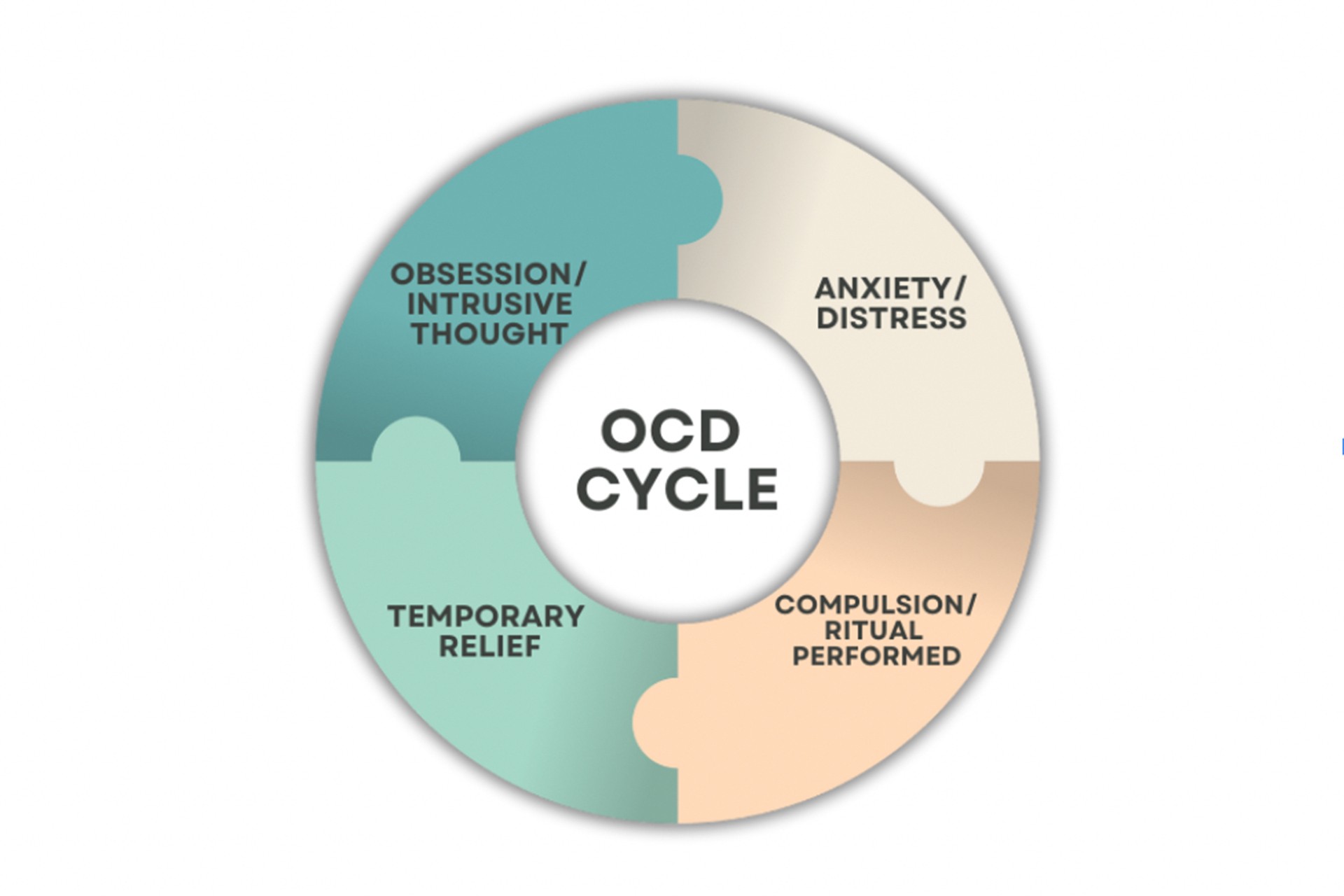
OCD is not orderliness, perfectionism, or preferring things tidy. It is a specific neurological and behavioural loop: an unwanted thought, image, or urge arrives (the obsession), the person experiences intense distress about it, they perform a mental or behavioural action to neutralise the distress (the compulsion), and the temporary relief that follows trains the brain to repeat the cycle. OCD content varies enormously. Contamination fears are well known. Less well known are harm OCD, sexual orientation OCD, religious OCD (sometimes called scrupulosity), relationship OCD, and somatic OCD focused on bodily sensations. The content can be almost anything; what makes it OCD is the loop. One of the painful features of OCD is that most people with the condition know the content of their obsessions is irrational, and the insight does not help. Knowing the thought is irrational does not make it less distressing, and the compulsion still feels like the only way out. This is why a treatment that explains the thoughts, or helps the person understand them, rarely changes the underlying loop. The treatment that works has to target the mechanism, not the content, and that distinction is what separates ERP from most other things that get called therapy for OCD.
What is ERP and why is it the gold-standard treatment for OCD?
Exposure and response prevention is the evidence-based behavioural treatment for OCD, supported by decades of randomised controlled trials and meta-analyses. The structure is straightforward, though doing the work is hard. The clinician and person identify the specific obsessions and compulsions, build a hierarchy of feared situations or thoughts from mildly distressing to severely distressing, and then deliberately expose the person to those situations or thoughts without performing the compulsion that usually follows. What happens next is the heart of the treatment. The brain learns two things at the same time. First, the feared outcome does not occur, even without the compulsion. Second, the anxiety subsides on its own, given enough time. With repetition, the obsession loses its power. The thought may still arrive; it no longer triggers the same alarm. ERP is uncomfortable in the short term and unusually effective in the longer term. Most clients see substantial change within twelve to twenty sessions, and the discomfort is real but temporary while the relief, when it arrives, is durable in a way that general talk therapy for OCD rarely produces. For people seeking specialist OCD and intrusive thoughts treatment, finding a clinician trained specifically in ERP is the single most important variable, more important than years of clinical experience in general, more important than the therapist's warmth or insight, more important than how the practice looks from the outside.
Why does exploring intrusive thoughts often make OCD worse?
Exploring intrusive thoughts in depth often makes OCD worse because it teaches the brain that these thoughts are meaningful and worth engaging with, which is exactly the cognitive habit that maintains OCD. Almost everyone has intrusive thoughts; the difference between an ordinary intrusive thought and OCD is what happens next. Most people register the thought as random noise and move on. In OCD, the thought is treated as a signal, a clue, a warning, or a revelation, and the brain begins compulsions to figure it out, neutralise it, or rule it out. When a therapist sits with a person and explores their intrusive thoughts in detail, they are doing what OCD wants. They are treating the thought as meaningful. They are spending time on it. They are signalling that this content deserves analysis. The person leaves the session having spent fifty minutes engaging deeply with the obsession, and the OCD brain learns that this thought is important. ERP does the opposite, deliberately. The thought arrives. The person notices it. They do not engage with the content. They do not analyse it. They do not seek reassurance. They sit with the discomfort and let it pass. Over time, the brain learns that the thought is not worth the alarm. The two approaches send the brain opposite signals: one says the thought matters, the other says it does not, and only one of these signals matches what OCD actually needs to hear. This is not a criticism of general therapists, most of whom are skilled and well-intentioned. It is a criticism of the assumption that OCD is a problem of meaning. It is not. It is a problem of mechanism, and the mechanism responds to a specific kind of intervention.
When is talk therapy actually useful for someone with OCD?
Talk therapy is not always wrong for someone who has OCD; it is specifically wrong as a treatment for the OCD itself. There are still legitimate places for it alongside ERP. The first is comorbid conditions. Many people with OCD also have depression, generalised anxiety, trauma, or relationship difficulties, and these often respond well to talk-based work and may need attention before, alongside, or after the OCD treatment. The second is existential or values exploration. After ERP has reduced the OCD's grip, some clients want to do deeper work on identity, meaning, or relationships, and this is reasonable and often useful. The third is family system work. For adolescents and children with OCD, parent coaching and family work are essential alongside ERP, and this work draws on different skills than the ERP itself; many families benefit from parent-led approaches like the SPACE program addressing the household accommodations that maintain childhood OCD. The principle is simple: talk therapy is fine for things that respond to talk-based work, and the wrong tool for things that respond to behavioural exposure. OCD itself sits firmly in the second category, but the person with OCD usually has other things in their life that sit in the first category, and a comprehensive treatment plan often includes both. The mistake is using talk therapy as the primary treatment for OCD itself, which is what most people who arrive at my practice having spent years in unhelpful therapy have been doing.
How do you know if your current therapy for OCD is actually ERP?
Four questions usually clarify whether the therapy is ERP or something else. The first is whether your therapist has explicitly named ERP, mentioned specific training in OCD treatment through the International OCD Foundation or equivalent, or used terms like exposure hierarchy and response prevention. If not, they are probably not trained in ERP. The second is whether sessions spend significant time exploring the content of your obsessions, what they might mean, or where they came from. If yes, this is the pattern that often deepens OCD rather than treating it, and ERP looks structurally different. The third is whether you are being given between-session exposure work to do, not just thoughts to notice but specific structured exposures to feared situations or thoughts with the compulsions deliberately prevented. ERP without homework is not really ERP. The fourth is whether you have been in therapy for OCD for more than six months without meaningful improvement. If yes, the therapy is probably not ERP and is unlikely to start working with more time; the issue is the approach, not the duration. If any of these questions raises doubt about whether what you are doing is ERP, a short consultation with a clinician trained specifically in ERP can help you figure out whether to continue with your current therapist, to add an ERP specialist alongside the current work, or to transition to ERP-focused treatment. Many good general therapists, when they recognise OCD, refer to ERP specialists themselves. If yours has not raised the question, it is worth raising it yourself.
The honest summary is that OCD is one of the most treatable conditions in mental health when treated with the right method, and one of the most demoralising when treated with the wrong one. ERP is the proven first-line approach for adults and children with OCD; talk therapy is the wrong primary treatment but a useful adjunct for the other layers of life that often need attention alongside. If previous therapy has not worked, that is usually the variable worth examining first, and the move from general talk therapy to ERP is one of the most transformative transitions in clinical mental health. The damage from years of wrong treatment is mostly reversible. The lost time is not, which is why finding the right treatment early matters more than it should.
Frequently Asked Questions
What is the difference between ERP and traditional talk therapy for OCD?
ERP, exposure and response prevention, works on the mechanism of OCD by exposing the person to feared thoughts or situations while preventing the compulsion that usually follows, which teaches the brain that the feared outcome does not arrive and the anxiety subsides on its own. Traditional talk therapy explores the content of intrusive thoughts: where they came from, what they mean, what they might be symbolising. This second approach treats the thought as meaningful, which is exactly the cognitive habit that maintains OCD.
Why does exploring intrusive thoughts make OCD worse?
Because it teaches the brain that these thoughts are meaningful and worth engaging with, which is the cognitive habit that maintains OCD. When a therapist spends time analysing what an intrusive thought might mean, they are signalling that this content deserves attention. The OCD brain learns that the thought is important. ERP does the opposite by treating the thought as noise, letting the person sit with the discomfort, and refusing to engage with the content. The two approaches send the brain opposite signals.
How long does ERP treatment take?
Most clients see substantial change within twelve to twenty sessions across three to five months. Severe or longstanding OCD, or significant comorbidity, can extend this timeline. Mild presentations sometimes resolve faster. A clinician trained in ERP can give a realistic estimate after two or three sessions of assessment. The discomfort of the work is real and temporary; the relief, when it arrives, is durable in a way general talk therapy for OCD rarely produces.
Will I still have OCD after completing ERP?
OCD vulnerability does not get erased. What changes is your relationship with the thoughts and your ability to recognise the pattern early. Most clients who complete ERP describe their OCD as quiet, manageable, and no longer running their life. Occasional flare-ups can happen, particularly under stress, and respond quickly to the same techniques. Functionally, most people recover and stay recovered with maintenance work in the years that follow.
Why doesn't every therapist offer ERP for OCD?
ERP requires specific training, willingness to sit with significant client distress in session, and a different therapeutic stance than most general therapy approaches teach. Many therapists were trained in approaches that work for other presentations and did not receive dedicated OCD training. The International OCD Foundation maintains directories of trained clinicians. Many good general therapists, when they recognise OCD, refer to ERP specialists rather than attempting to treat it themselves, which is exactly the right move.
My therapist explores my intrusive thoughts in detail. Should I stop?
For OCD specifically, this approach often makes things worse, but the call depends on your situation and what else is happening in the work. A consultation with a clinician trained in ERP can help you figure out whether your current therapy is treating OCD or treating a different problem. If your therapist has not raised the question of ERP themselves and you have been doing OCD-focused work for more than six months without meaningful improvement, the approach is most likely the issue.
Author bio
I'm Dr. Rick Smith, a clinical psychologist in Hong Kong working with high-performing teens and adults on ADHD, anxiety, OCD, addiction, and executive functioning. My work draws on Acceptance and Commitment Therapy, Cognitive Behavioural Therapy, and Exposure and Response Prevention, applied to international school families and the expatriate community.
Before psychology, I spent nearly two decades in classrooms supporting students with learning differences. I'm the author of STOP Reading (4.8 stars on Amazon) and deliver workshops for schools and organisations across the region. More at rick-smith.com.